
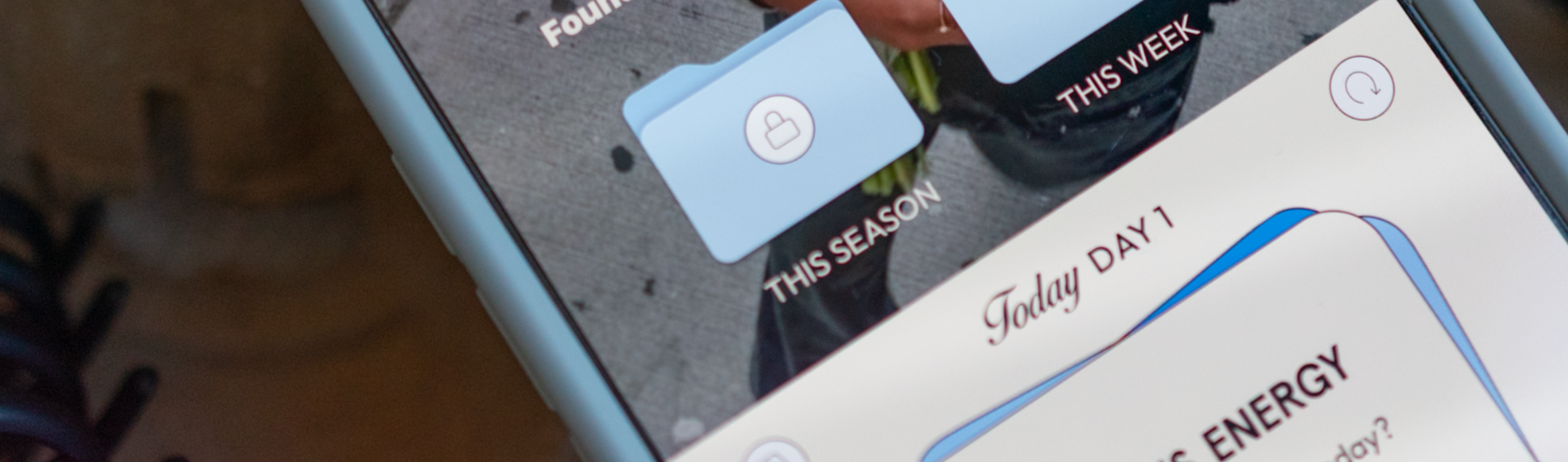
product decisions
how self-ish was built, one product decision at a time….
I built Self-ish, a personal growth app for ambitious women, and launched it on the App Store as a solo builder. I owned strategy, design, development and analytics. It started with a problem I had myself. When the data showed my hypothesis was wrong, I used it to redesign to product.
Riya Patil, Product Manager & Builder
Launched on the App Store (15 beta testers → 100+ early active users)
Problem Statement Ambitious women have a clear vision of the life they want and many make a vision board every year. But they’re so busy keeping up with their current life that they don’t feel any closer to it. Vision boards don’t turn into action and habit trackers aren’t connected to the vision.
Key product decisions
Community features only work when enough people are on the platform at the same time. Testing the core loop first was faster and most cost effective.
Trade-off: If the hypothesis is wrong, I will have to rebuild.
Result: The hypothesis was wrong but I learned that with 100 users instead of after building a much larger product.
focus on individual tracking, defer community and membership features
1
Asking new users to set up a vision board, goals and habits all at once was the main cause of drop-off. It recreated the overwhelm the app was meant to fix.
What I changed: First-time setup asked for just a few goals. The vision board and habits could be filled in later.
Result: First session drop-off went down significantly.
cut onboarding down to what matters
2
E..
J…
3
W..
4
O..
Product HypothesisIf women can turn their vision into a few goals and small daily habits in one place, they’ll feel like they’re progress towards the life they want and that progress will keep them checking in.
User Personas [Description + Link]
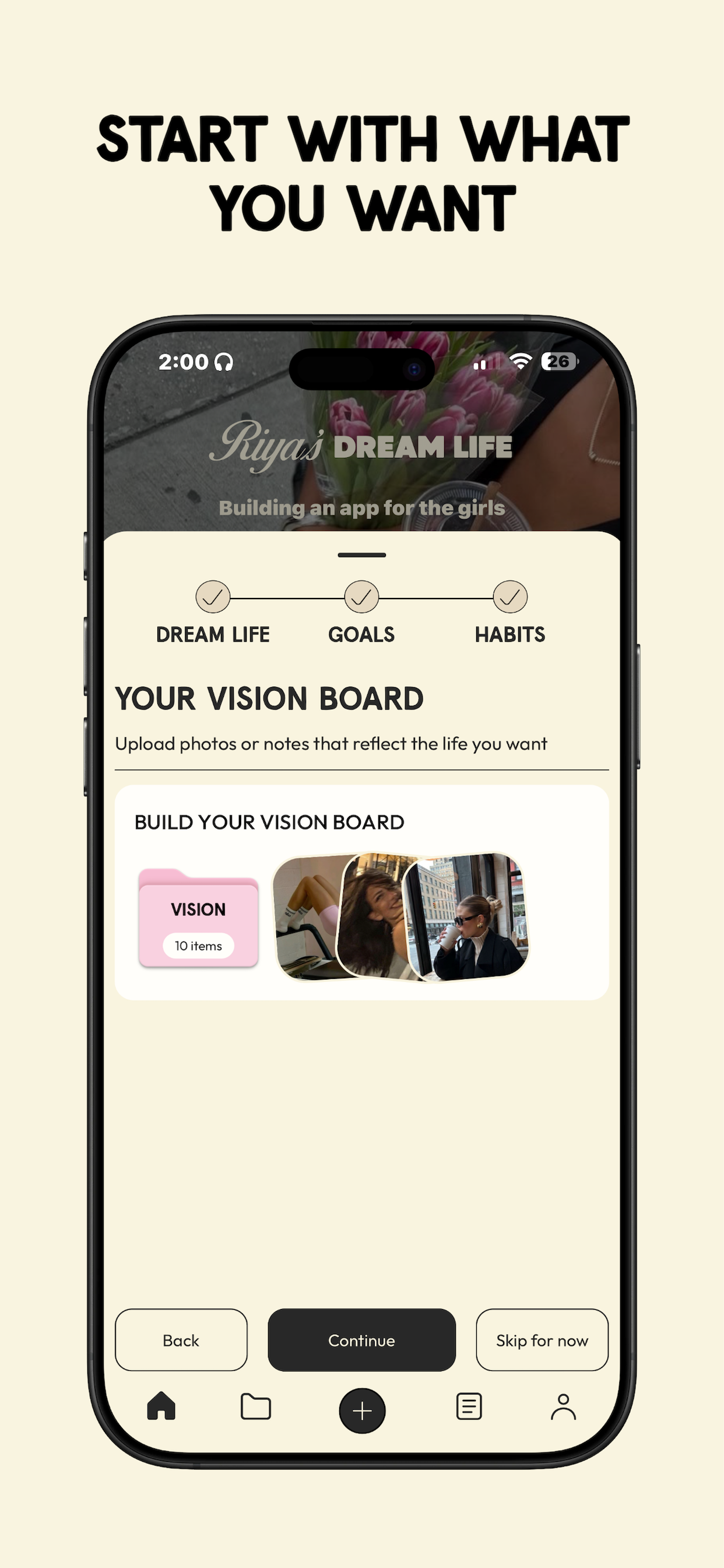
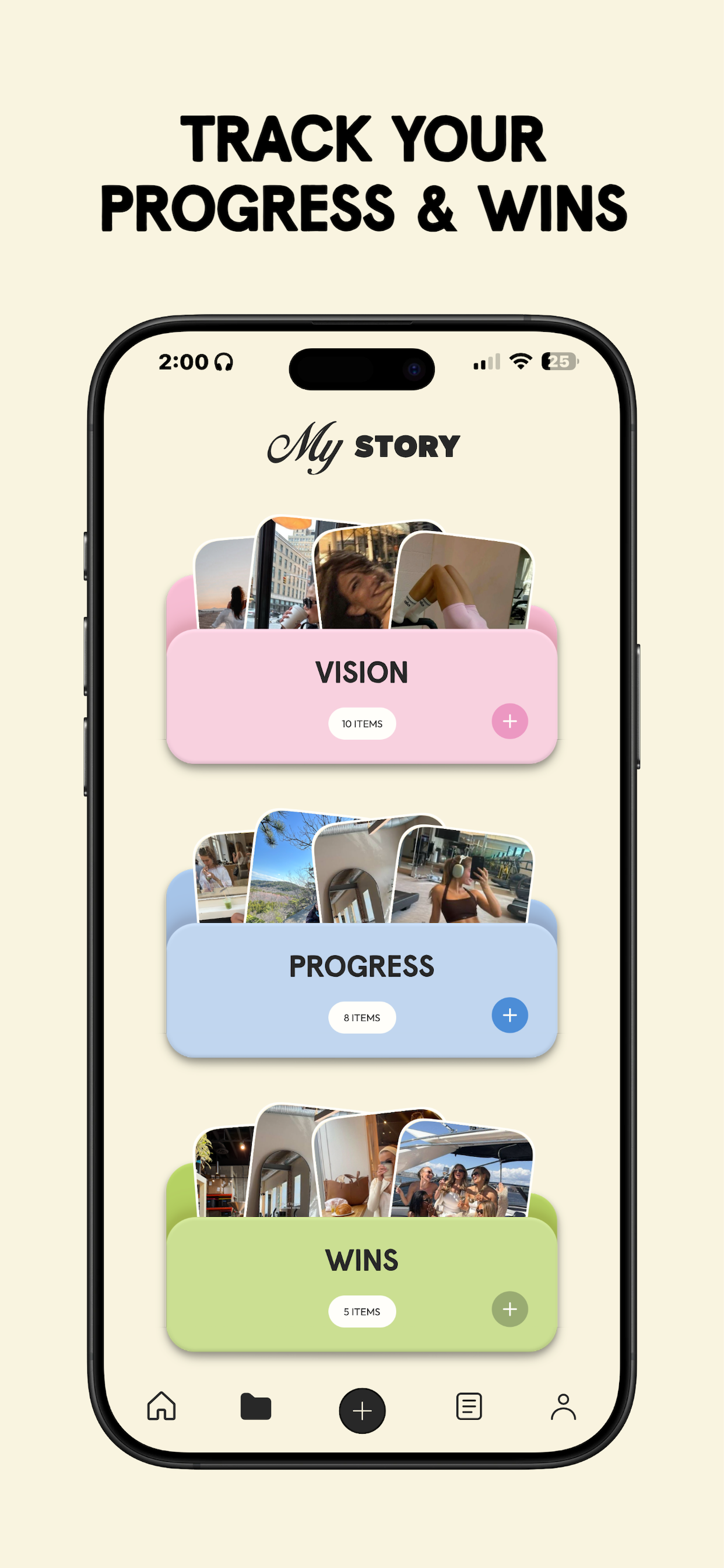
MVP Scope Included: vision board, goals, daily habits, progress and wins boards
Excluded: community and mentor features
Success Metrics Activation: new users finish setup and create at least one goal with a daily habit
Engagement: users check in on most days
Retention: users are still checking in at week 4
The Process Validated the problem: ran 30 users interviews to confirm the gap and defined a focused MVP
Built a product roadmap
Designed the screens and user flows in Figma
Worked with brand and UI designers to improve designs
Developed the prototype using React Native and Claude Code
Developed the database and email OTP login using AWS and later transitioned to Supabase
Beta tested the MVP with 15 testers and refined the MVP based on user feedback
Launched the app on the Apple App Store (linked) and grew the initial user base through organic acquisition
self-ish v1
-
![]()
start with what you want
-
![]()
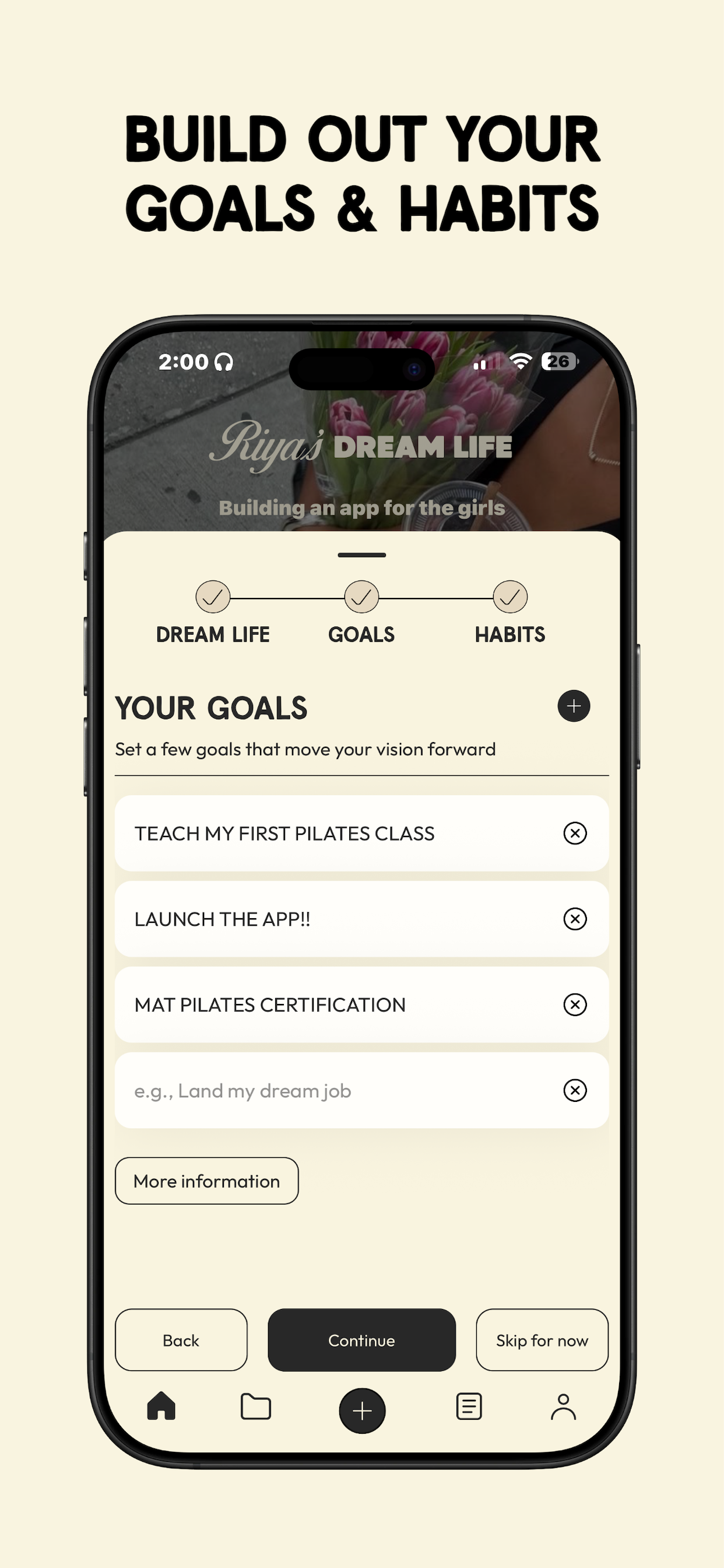
build out your goals & habits
-
![]()
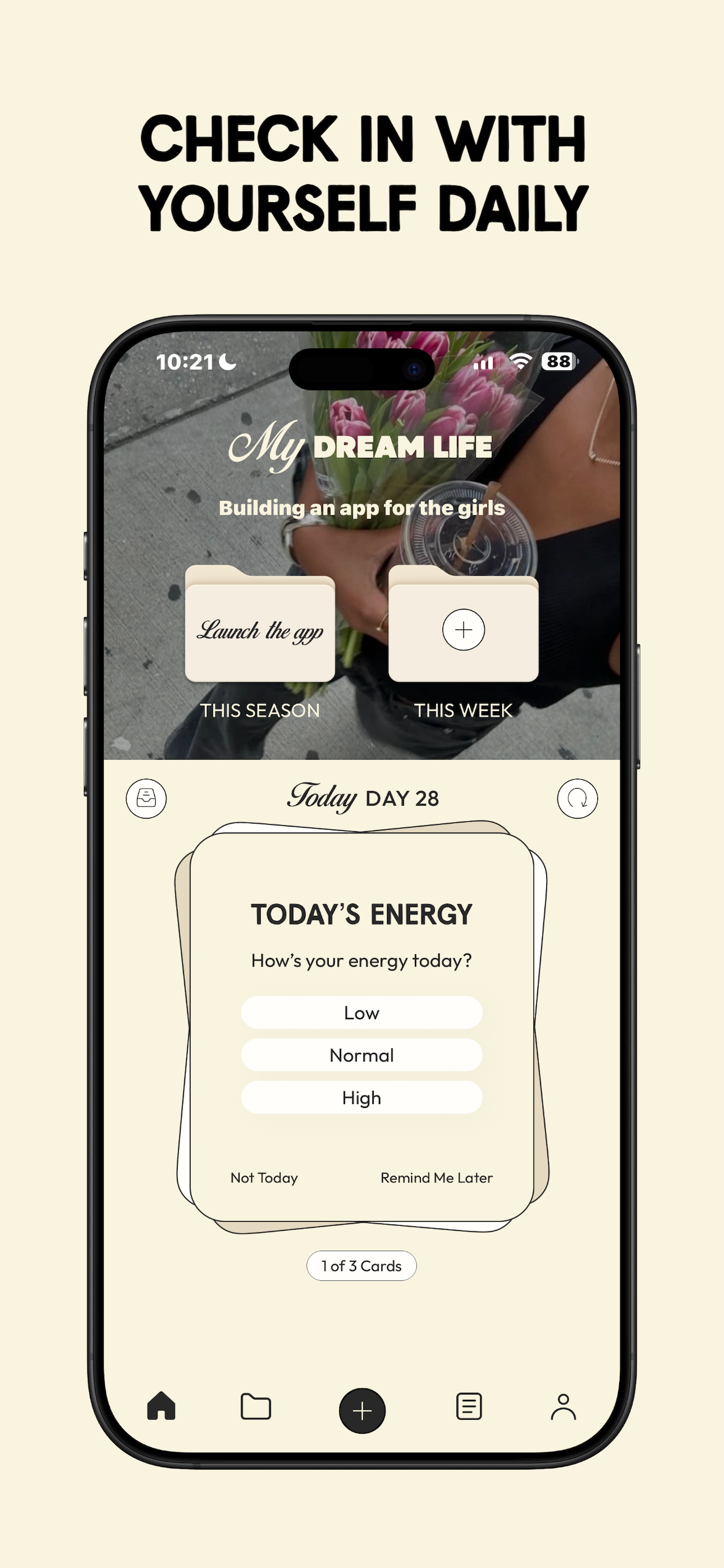
check in with yourself daily
-
![]()
track your progress & wins
-
![]()
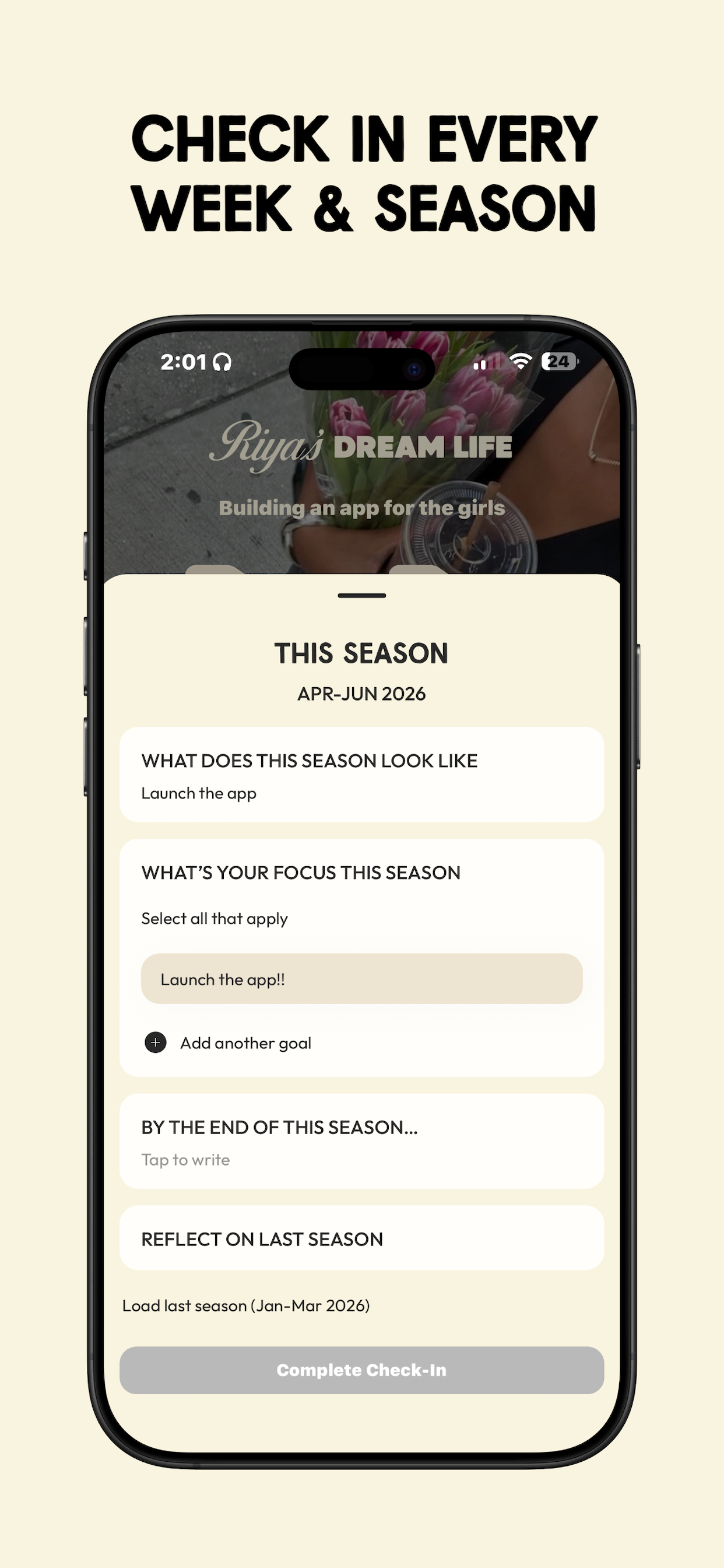
check in every week & season
-
![]()
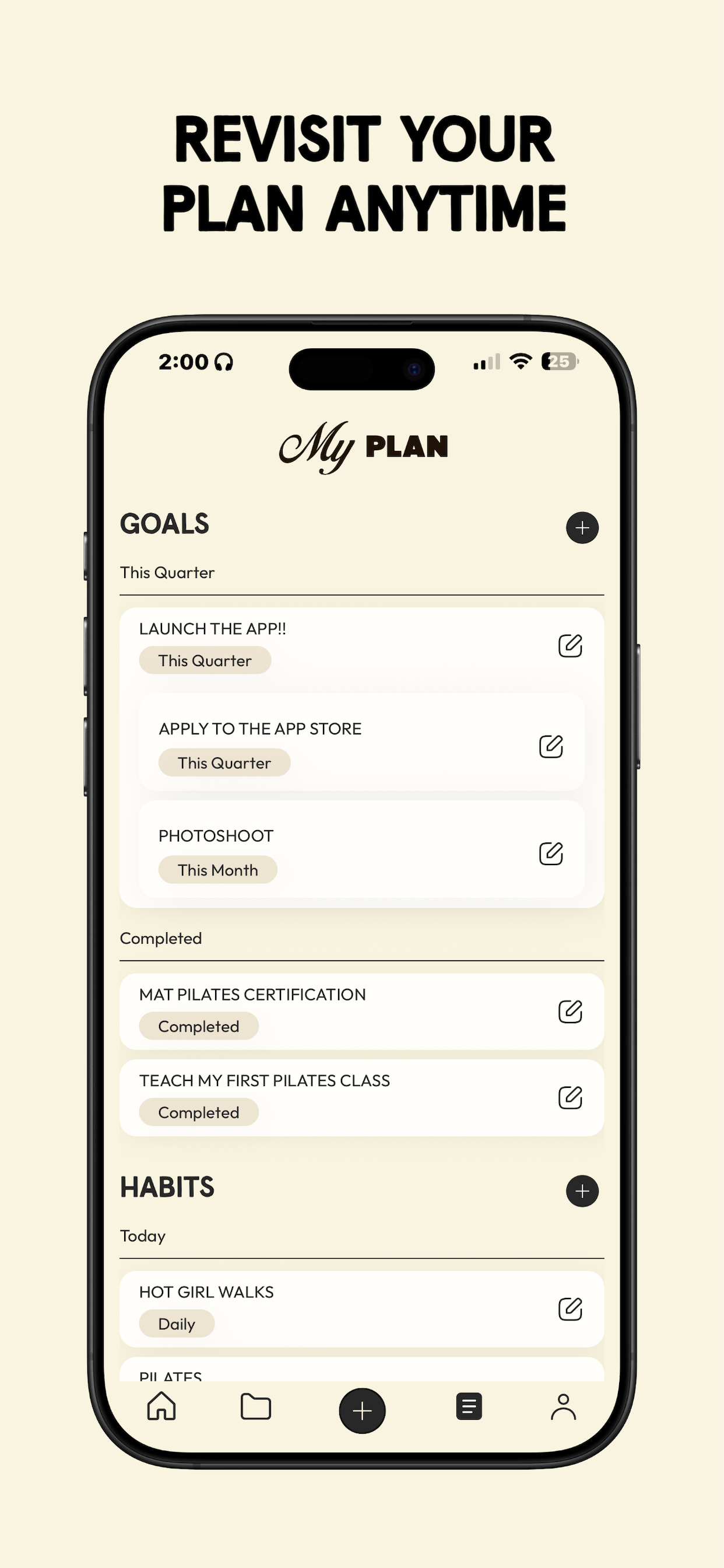
revisit your plan anytime
Post Launch InsightsProduct Anaytics
Activation: initially low and then improved after refining the onboarding experience
Engagement: typically low after ~4 days of consistent check-ins
Retention: week-2 retention was very low
User Feedback
The Insight
When life got busy, there was nothing bringing the user back. An app that only reflects your own goals back to you has no one checking in with you and no one to learn from. I saw it in my behavior too. The app needed more value.
Version 2
applying the lessons learned from version 1 to build the next version of self-ish
Reframed ProblemHaving a clear vision and the right habits isn’t enough on its own. Busy women make more progress with structure, people working towards similar goals and mentors who have already done what they’re attempting.
I validated this problem by surveying X people and found ___
Product HypothesisHaving a clear vision and the right habits isn’t enough on its own. Busy women make more progress with structure, people working towards similar goals and mentors who have already done what they’re attempting.
Design PrinciplesSmall groups, not a social feed: Women can join small groups based on the goal they are working towards.
…